Nepal’s power sector stands at a paradox—much like possessing a vast water reservoir without sufficient pipes, pumps, or taps to utilize it efficiently. At times, energy spills over unused; at others, demand remains unmet. This paradox arises from the challenge of managing abundant hydropower resources amid low domestic demand, dependence on neighboring countries, competition from alternative energy sources, the slow pace of power project development, and the growing impacts of climate change. If these factors are not addressed in a coordinated and strategic manner, they risk undermining the sustainable development of the power sector as a whole.
India Power Market – Nepal’s Balancing Battery and increased dependency
In November 2025, electricity was disconnected for 25 industries with a total electricity demand of 300MW due to a dispute over payment of dedicated trunk line electricity charges. This led to the shutdown of certain hydropower projects since the power generation could not be fully consumed in the country and additional export of power to India could not happen instantly. In January 2026, after an 18-hour power cut era, residential load shedding resumed during morning and evening peak hours, including industrial power cuts. This could be linked to a power import deal between NEA and Indian power traders for the dry season of 2026, which got entangled in a controversy over the purchase price. Power could not be imported from India as required.
Any variation in the normal course, if not observed by the Indian power system, leads to either spillage or loadshedding. Such is the dependency of Nepal’s power system on India that it is not short of a battery system.
During the wet season of 2025, the electricity generation surplus reached 1400 MW, as against export approval of 1141 MW by India, leading to spillage of power, mainly at NEA’s power stations. The shadow of geopolitics looms large on cross-border power trade. With vast hydropower resources at 200GW as against the present generation of 3.8GW (1.9%) and its own peak demand of 1.8 GW(0.9%), the gap between numbers is too stark.
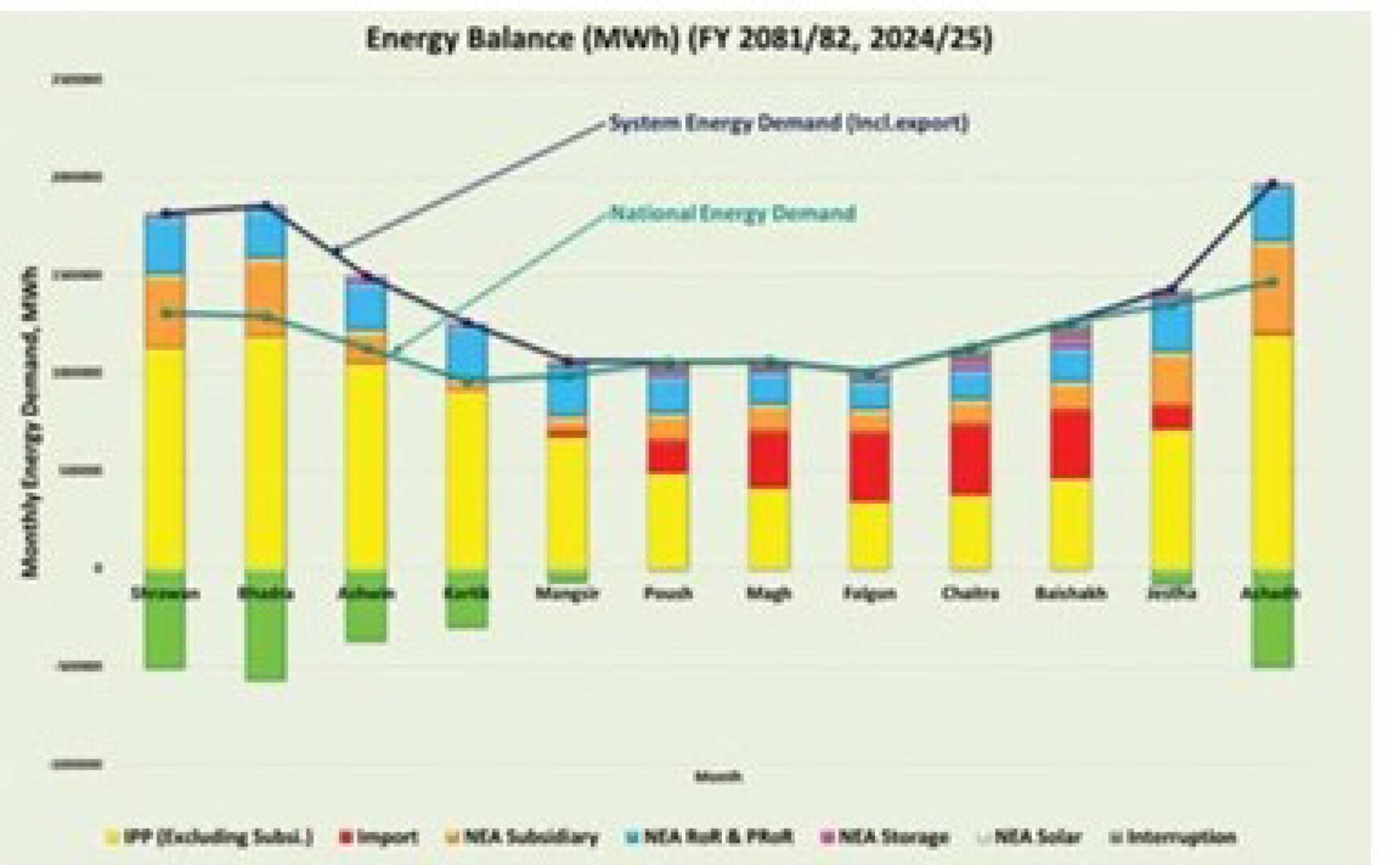
During the dry season, Nepal imports power from India and manages its requirement. During the wet season, the surplus generation is exported to India. Any variation in the normal course, if not observed by the Indian power system, leads to either spillage or loadshedding. Such is the dependency of Nepal’s power system on India that it is not short of a battery system. This issue needs to be addressed in terms of Nepal’s own energy security and the need to export power to India by harnessing its vast hydropower resources. Nepal needs to develop power markets for import and export of power by building cross-border transmission lines, allowing the private sector in electricity trading, and participating actively in regional power markets.
The lowest consumer of power
In 2025, for every three cars sold in Nepal, 2 were Electric Vehicles. This is probably the fastest EV adoption in the world in percentage terms annually. Still, two-thirds of Nepal’s household energy consumption is from fuel wood, indicating a vast gap in electricity usage. While access to electricity is 97%, the usage of electricity in the daily life of common Nepalis continues to be low. Electricity still could not enter the kitchen of a rural Nepali home.
The Nepalese industry complains of the non-availability of quality power, leading to higher production costs. The industry demands that why can’t cost of power cannot be reduced in a country with such vast resources. Without cheap electricity industry is not able to be competitive.
With 330KW per capita consumption, Nepal stands at one of the lowest ranks globally.
Norway | ████████████████████████ (24,182)
USA | █████████████████████ (11,855)
China | ████████ (3,963)
India | ███ (846)
Bangladesh | ██ (461)
Nepal | █ (330)
The key drivers for increasing demand could be Electric cooking (replace LPG with induction stoves), Electric transport (EVs, electric buses, rail), Industrial electrification (cement, steel, agro-processing), and Irrigation pumping & cold storage.
Competition from alternative sources of power generation
Recently, NEA leadership remarked about developing solar power projects with Battery Energy Storage System (BESS) to address the morning and evening peaks. Further pump storage hydropower projects powered by solar were also discussed. This drew criticism from the private sector that hydropower power purchase agreements are not being signed, and on the other hand, alternative sources of power generation are being explored.
In April 2025, 960MW solar power projects were awarded by NEA at a less than 3.5 cents tariff, lower than 30% as compared to the hydropower tariff. There were three times oversubscription of the tender by bidders, indicating a tactical shift in interest towards solar power. The Indian power market reported blending of Solar, Wind, and BESS, leading to 80% Round the Clock ( RTC) power in 24 hours. The world power outlook projected solar and wind taking up 70% of global power generation by 2050. Year 2025 confirmed solar as the primary driver of the energy transition, fundamentally reshaping the global power system.
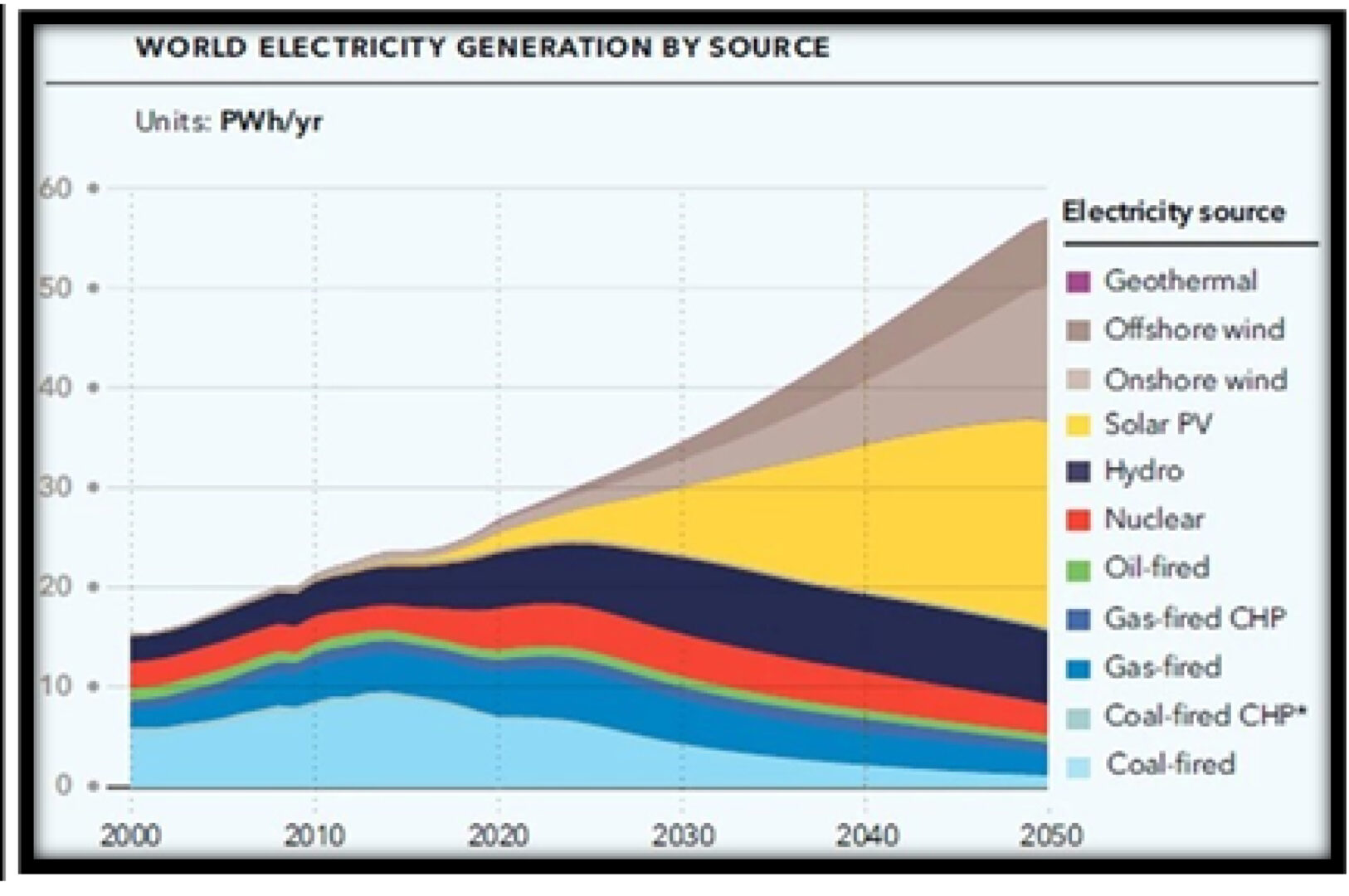
Nepal needs to develop Hydropower as its primary energy, with Solar + BESS as supporting technologies, with a proper policy framework.
The Climate Change Challenge
In early 2025, the Supreme Court of Nepal came up with a landmark judgement restricting the development of hydropower projects in National Parks/ environmentally protected areas. This has left the future of 242 hydropower projects, with a combined capacity of 16,735 megawatts, uncertain.
During the monsoon rains, more than a dozen projects were damaged due to the fury of floods, posing serious risks to hydropower projects. Glacial Lake outbursts, landslides in upstream areas leading to damming of rivers, changing rainfall patterns, and the impact of hydrology, aquatic life impact in the dewatered zone, etc., pose an unprecedented climate change impact on hydropower projects. A recent study by ICIMOD identifies key hydropower risks in the Hindu Kush Himalaya (HKH) as climate change impacts (GLOFs, landslides, glacier melt, erratic flows) and social issues (lack of local benefit sharing), threatening infrastructure and sustainability.
In this era of green energy transition, where even the most stone-hearted human being is also getting away from the usage of fossil fuels, the greenest source of power will win. Hydropower needs to correct it course to demonstrate real green in it. Climate-proof infrastructure is required with existing and future hydropower facilities engineered and operated with climate extremes in mind.
While visiting the Himalayan region (including the Everest area), UN Secretary General Guterres drew global attention to the rapid melting of Nepal’s glaciers due to climate change.
He said that Nepal’s mountains have lost close to one-third of their ice in just over 30 years and issued a stark call to end the age of fossil fuels to avert worsening impacts. Around the same time, his famous ‘Moment of Truth’ speech warned that the world is at a critical turning point on climate change, where decisions in the next few years will determine whether humanity can still limit global warming and avoid catastrophic impacts. We are ‘Playing Russian Roulette’ with the Planet, with a warning that the world is on a “highway to climate hell”. This will impact the power generation trajectory and the way we use various sources of power.
Hydropower needs to correct its course to demonstrate real green in it. Climate-proof infrastructure is required with existing and future hydropower facilities engineered and operated with climate extremes in mind.
Slow Pace of Power Projects
7 ministries and 24 departments need to be dealt wit h, and 36 Acts with many rules and regulations need to be complied with to construct a hydropower project. Approval file moves from one desk to another, taking years to obtain all approvals and start construction of a power project. The rules of the game change while projects are being developed, leading to very serious erosion of investor confidence. Power Purchase Agreement policy keeps changing with changes in leadership at NEA and the Ministry of Energy. A 34-year-old Electricity Act could not be amended after 4 attempts in the last 14 years, indicating a lack of seriousness in the development of such a crucial sector of the economy.
Power Sector Development is a long-term activity requiring the highest level of policy stability and clear vision. It takes a decade for a hydropower project to start generating electricity from the day it is conceived. Hydropower projects are capital-intensive ventures with decades-long payback periods. Investors, whether private companies or development banks, require some certainty that plants will operate as expected. With a usual approach, Nepal may languish in the glory of its untapped water resources, which may deplete beyond reach. A visionary policy is required to address the numerous factors affecting the development of the sector. Path-breaking, unprecedented initiatives like sunset law, one window approvals, mission to achieve, developing markets, etc., are the need of the hour. Nepal sits on a huge opportunity to develop its power sector and become prosperous. However, the paradox remains, and Nepal has to overcome the contradictions affecting its development.
(Garg is the Vice President, IPPAN )